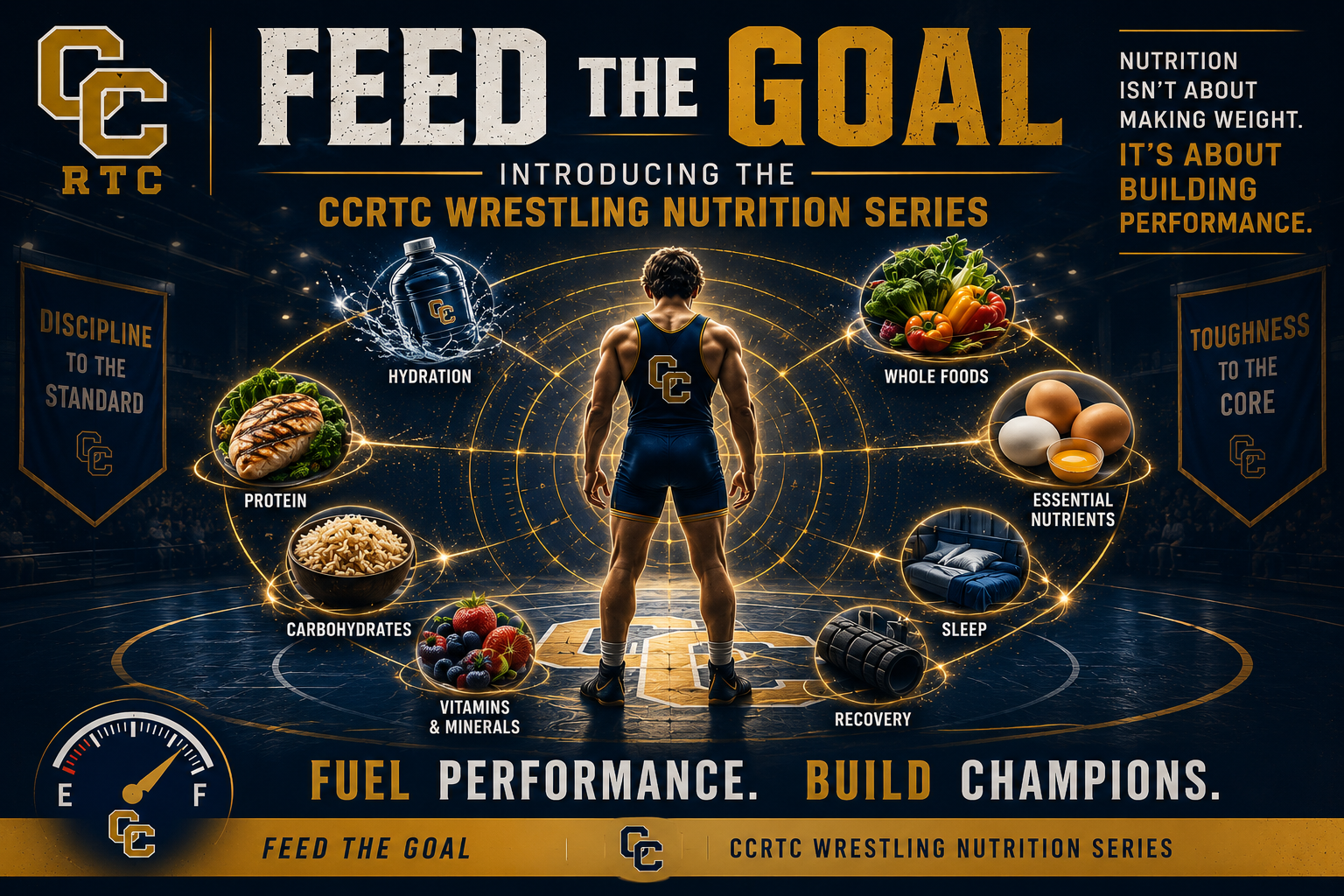
Feed the Goal: Introducing the CCRTC Wrestling Nutrition Series
Feed the Goal: A Wrestler’s Guide to Nutrition Throughout the Year
One of the greatest misconceptions in wrestling is that nutrition is simply about making weight.
Unfortunately, many athletes and parents spend years chasing shortcuts, avoiding entire food groups, or believing there are “good foods” and “bad foods.” Others assume that eating less is somehow the answer to better performance.
Nothing could be further from the truth.
The truth is that nutrition in wrestling is highly dependent upon the season, the training phase, and the specific goal of the athlete. The foods that help a wrestler build strength during the offseason are not necessarily the foods that help them perform at a tournament. Likewise, the meals that support a healthy weight cut are very different from what should be consumed immediately after weigh-ins.
Elite wrestlers do not simply eat healthy.
They eat intentionally.
They feed the goal.
Why We Are Writing This Series
The purpose of this series is to help athletes and parents understand that nutrition is not a single diet, but rather a year-round strategy that changes as training and competition demands change. As both a parent of athletes and a coach of many, this reflects both a combination of many years of experience when it comes to nutrition for wrestlers and the advice received from many nutritionists, trainers, and dieticians. It is a culmination of decades worth of advice brought down to simple easy to read suggestions.
Just as wrestling practices evolve throughout the year, so should nutrition.
There is no one-size-fits-all meal plan.
There are no universally “good” or “bad” foods.
Instead, there are foods that are appropriate for the demands of a particular phase of training, and foods that are better suited for another.
The same steak that helps build muscle during the offseason may not be the best choice immediately after weigh-ins. The carbohydrates that fuel a tournament may be excessive during periods of lower activity. Fiber-rich vegetables that promote long-term health may temporarily be reduced during the final days before competition.
Context matters.
Timing matters.
Purpose matters.
The Goal for Athletes
By reading this series, our hope is that wrestlers learn to think differently about food.
We want athletes to understand that nutrition is another form of training.
The goal is not simply to:
- Make weight.
- Lose weight.
- Eat less.
- Follow fads.
- Fear certain foods.
Instead, the goal is to learn how to:
- Build strength.
- Recover faster.
- Train harder.
- Make weight safely.
- Perform at your best when it matters most.
- Sustain a healthy relationship with food throughout your wrestling career.
The greatest wrestlers don’t accidentally fuel themselves well.
They learn how to do it.
The Goal for Parents
Parents play an enormous role in a wrestler’s success.
The kitchen is often where wrestling performance begins.
Our hope is that this series helps parents understand how nutrition supports:
- Growth and development.
- Strength gains.
- Healthy body composition.
- Safe weight management.
- Recovery from difficult practices.
- Tournament performance.
Most importantly, we hope parents come away understanding that nutrition should not become a source of stress or conflict within the home.
Food should fuel performance, not create fear.
Young athletes need support, consistency, and healthy habits—not extreme diets or drastic weight-cutting methods.
The Philosophy: Feed the Goal
Throughout this series, we will repeatedly return to one simple principle:
Feed the goal.
There are no “good foods” and “bad foods.”
There are only foods that support the goal in front of you.
The meal that helps you gain strength in June may not help you perform in March.
The meal that helps you make weight may not help you recover after weigh-ins.
The meal that fuels the finals of a tournament may not be ideal during the offseason.
The body has different needs throughout the year.
Understanding those needs is one of the keys to long-term success.
What to Expect
The Feed the Goal series follows the nutritional needs of wrestlers throughout training, competition, recovery, and everyday life. Each part addresses a different piece of the process while reinforcing one central idea: nutrition should always serve the goal in front of the athlete.
Part 1: Offseason Nutrition
Building Strength, Recovery, and Healthy Habits
How wrestlers should eat when competition is far away and the goal is growth, strength, and development.
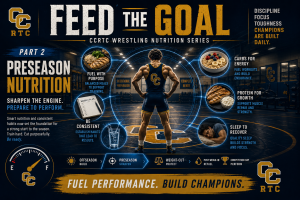
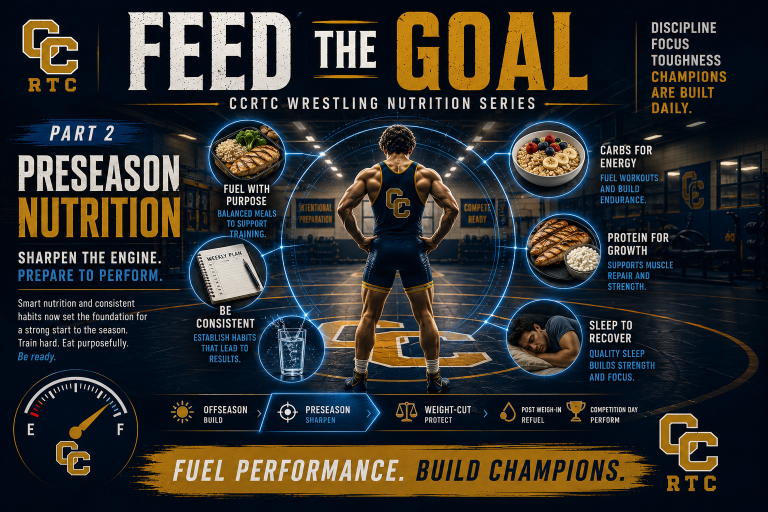
Part 2: Preseason Nutrition
Preparing for the Season Without Panic
How athletes can gradually prepare their bodies for the wrestling season and position themselves for success long before the first weigh-in.
Part 3: Weight-Cut Nutrition
Removing Weight Without Sacrificing Performance
How to approach the final weeks before competition while protecting strength, energy, hydration, and performance.
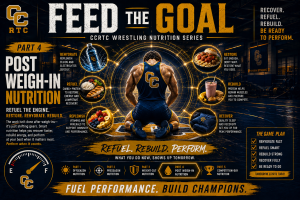
Part 4: Post Weigh-In Nutrition
The Golden Two Hours
What wrestlers should eat and drink immediately after weigh-ins to restore the body and prepare it to compete.
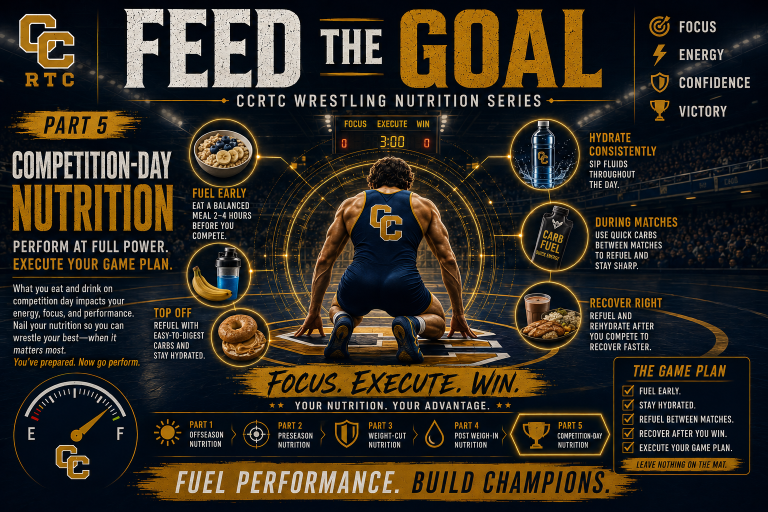
Part 5: Competition-Day Nutrition
Fueling Performance When It Matters Most
How to stay energized, comfortable, focused, and properly fueled throughout tournaments, including multi-day competition.
Part 6: Shared Commitment
Building a Culture That Feeds the Goal
How parents, siblings, teammates, and friends can make disciplined choices easier by sharing in the athlete’s commitment and supporting the environment around them.
Special Feature: General Nutrition for Teens
Building Healthy Habits for Growth and Performance
This guest contribution explores the nutritional foundations young people need for growth, recovery, academics, athletics, and lifelong health. While not a numbered part of the series, it provides valuable context for every young athlete.
Part 7: Hydration
Why Most Wrestlers Are Losing Before the Whistle
Hydration is about far more than making weight. Learn how daily hydration habits influence strength, recovery, concentration, weight management, and performance.
Part 8: Supplements
Food First, Supplements Second
From protein and creatine to pre-workouts and products that promise shortcuts, this article helps wrestlers and parents understand what may have value, what is situational, and what is probably best left on the shelf.
Part 9: Recovery
Why Growth Happens Between Practices
Training creates the stimulus, but recovery allows the body to adapt. This article explores sleep, nutrition, stress, active recovery, injury awareness, and why intentional rest is part of training rather than an escape from it.
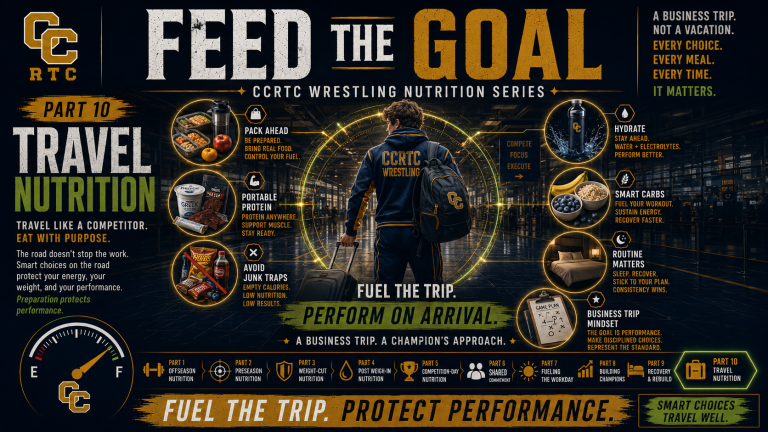
Part 10: Travel Nutrition
Eating Well Away From Home
Tournaments are business trips. Learn how wrestlers, parents, and coaches can plan food, hydration, sleep, and recovery on the road without allowing travel to become a vacation from good habits.
Part 11: The Parent’s Guide to Feeding Wrestlers
Supporting Performance Without Creating Anxiety
Parents shape much of the environment surrounding a young athlete. This article explores how families can support nutrition, recovery, independence, and healthy relationships with food without becoming the food or weight police.
Part 12: The Family Table
Why Eating Together Still Matters
Healthy choices do not have to belong only to the wrestler. Shared meals and family participation can support the athlete’s goals while improving habits, relationships, and health throughout the household.
Part 13: Consistency
Small Habits. Extraordinary Results.
No single meal, workout, supplement, or night of sleep creates a champion. This article connects the lessons of the entire series and explains why ordinary decisions, repeated consistently over time, produce extraordinary results.
Coming Next
Feed the Goal will continue beyond the fundamentals of what to eat and when to eat it. Upcoming articles will explore the challenges that arise as wrestlers become more independent and learn to apply these principles throughout everyday life.
Part 14: Eating on a Budget
Fueling Wrestlers Without Breaking the Bank
Good sports nutrition does not require expensive specialty foods. We will explore practical ways families can provide quality protein, carbohydrates, snacks, and competition fuel while controlling costs.
Part 15: Body Image and Weight-Class Identity
You Are More Than a Number on the Scale
Wrestling places unusual attention on body weight. We will discuss healthy body composition, growth, comparison, weight-class decisions, and keeping an athlete’s identity separate from the number on the scale.
Part 16: Stress, Anxiety, and Emotional Nutrition
Feeding More Than the Body
School, wrestling, relationships, expectations, and everyday life all create stress. We will explore how that stress can affect eating, sleep, recovery, and performance—and how families can help.
Part 17: Social Media and Nutrition
Separating Science From Marketing
Influencers, supplement companies, dramatic transformations, and questionable nutrition advice compete constantly for an athlete’s attention. We will discuss how wrestlers and parents can separate useful information from marketing and misinformation.
Part 18: College Wrestling Nutrition
Learning to Feed Yourself at the Next Level
Eventually, parents no longer control the kitchen. We will explore dining halls, dorms, grocery shopping, limited budgets, travel, changing training demands, and the responsibility that comes with nutritional independence.
Part 19: Nutrition Mistakes That Cost Matches
Small Errors, Big Consequences
Under-fueling, dehydration, poor recovery, bad tournament meals, last-minute weight management, and other small mistakes can quietly steal performance. This article will bring the series together as a practical troubleshooting guide.
Part 20: Nutrition Beyond Wrestling
Feed the Athlete for Life
Every wrestling career eventually ends. The final chapter will examine how the lessons learned through nutrition—discipline, preparation, consistency, stewardship, and healthy relationships with food—can continue serving athletes long after their final match.
Nutrition Is Training
The most successful wrestlers understand that nutrition is not separate from training.
Nutrition is training.
Every meal is either supporting recovery or delaying it.
Every snack is either helping performance or hindering it.
Every season brings different demands.
Our hope is that this series helps wrestlers and parents make better decisions, avoid common mistakes, and develop habits that support both athletic success and lifelong health.
Because wrestling success isn’t built by eating less.
It isn’t built by starving.
And it certainly isn’t built by fear.
It is built by learning to eat intentionally.
It is built by learning to fuel performance.
It is built by learning to feed the goal.
Feed the Goal Series


2 Comments