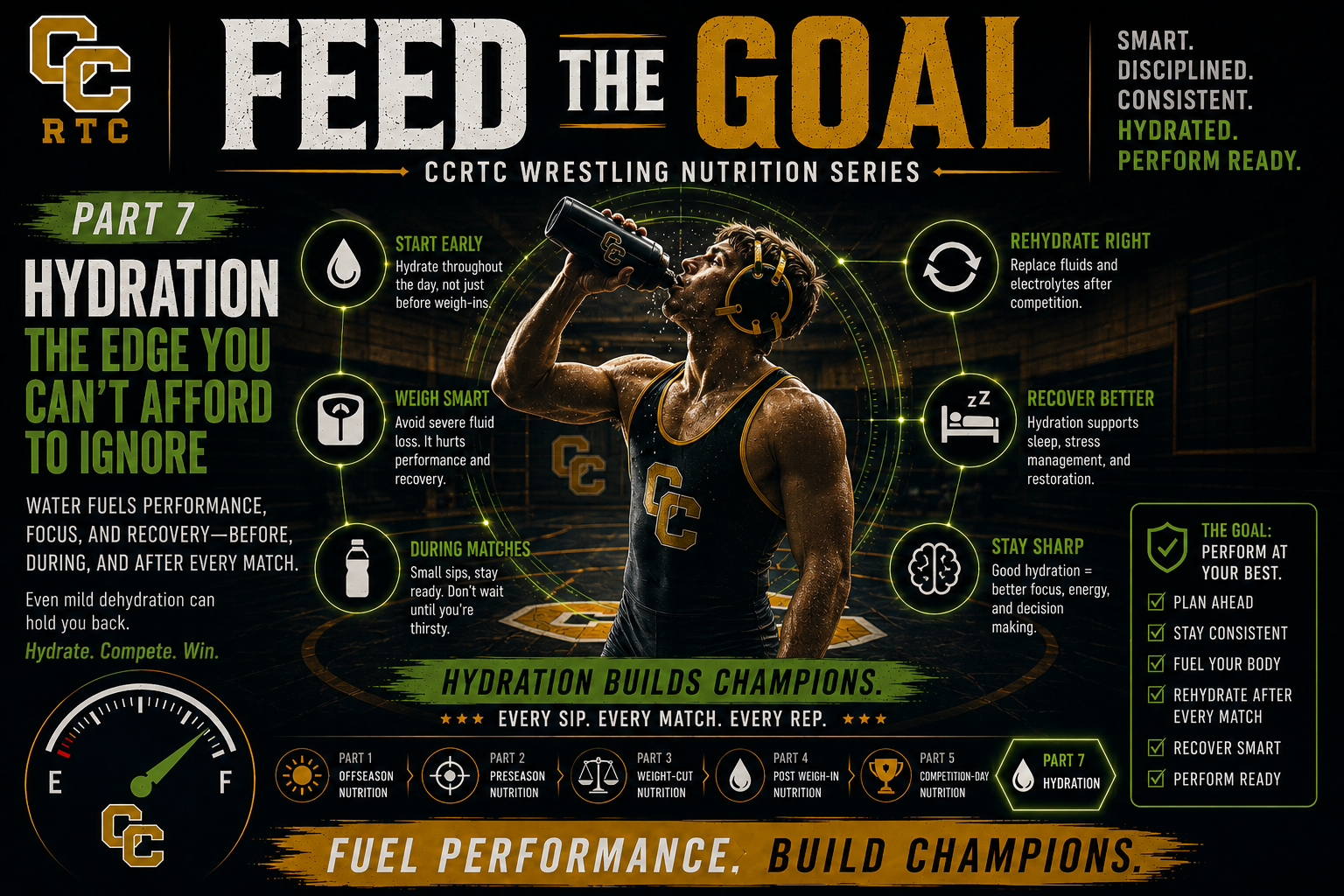
Feed the Goal – Part 7: Hydration
Why Most Wrestlers Are Losing Before the Whistle
Throughout the Feed the Goal series, we’ve discussed building strength, preparing for the season, making weight safely, recovering after weigh-ins, and fueling performance on competition day. We’ve even talked about how families and support systems can help athletes stay on track.
Yet one of the simplest—and most overlooked—areas of performance is hydration.
Most wrestlers think about hydration only when they need to make weight. They view water as something that matters during a weight cut or immediately after weigh-ins. In reality, hydration affects everything. Strength, endurance, recovery, concentration, mood, and reaction time all depend upon maintaining proper fluid balance.
The truth is that many wrestlers are stepping onto the mat already behind.
They’re losing before the whistle.
Why So Many Wrestlers Are Chronically Underhydrated
Most athletes don’t intentionally avoid drinking water. In fact, many are surprised to learn just how frequently they operate in a mildly dehydrated state.
Busy schedules, long school days, strength training, practices, hot weather, and simple forgetfulness all contribute. Add in energy drinks, coffee, soft drinks, or attempts to keep body weight artificially low, and many wrestlers spend much of the year underhydrated without realizing it.
The problem is that dehydration is rarely dramatic.
It happens gradually.
Because the body adapts, athletes often accept feeling tired, sluggish, mentally foggy, or constantly thirsty as normal. They assume everyone feels that way.
They don’t.
Feeling depleted should not become normal.
Small Losses Have Big Consequences
One of the most surprising things about hydration is how little fluid loss it takes to affect performance.
Research has shown that losing as little as two percent of body weight through dehydration can negatively affect:
- Strength and power output.
- Endurance.
- Mental focus and concentration.
- Reaction time.
- Decision-making.
- Recovery between matches.
In a sport where the difference between winning and losing is often measured in seconds or inches, giving away performance because of poor hydration simply doesn’t make sense.
Hydration is performance.
Thirst Is a Terrible Coach
Many athletes rely on thirst to tell them when it’s time to drink.
Unfortunately, thirst is not an early warning system.
By the time you feel thirsty, your body is already behind. Waiting until you’re thirsty to drink is much like waiting until your gas tank is empty before looking for a gas station.
Hydration should never be reactive.
It should be proactive.
The best wrestlers don’t drink because they are thirsty. They drink because they understand what their bodies require to perform.
Daily Habits Matter More Than Last-Minute Efforts
As we discussed in Part 2, hydration assessments reward preparation. The same principle applies throughout the year.
Hydration cannot be fixed by drinking two bottles of water thirty minutes before practice. You cannot spend all day dehydrated and suddenly “catch up” right before stepping onto the mat.
Hydration is built through small habits repeated consistently:
- Carrying a water bottle throughout the day.
- Drinking regularly rather than occasionally.
- Replacing fluids after practice.
- Choosing water over soda most of the time.
- Making hydration part of your routine.
The easiest weight cut is the one that begins with a well-hydrated athlete.
Monitoring Hydration Doesn’t Need To Be Complicated
Many wrestlers overcomplicate hydration.
You don’t need expensive gadgets or complicated calculations. Two simple tools provide most of the information you need.
Urine Color
Urine color is one of the easiest indicators of hydration status.
Generally speaking:
- Pale yellow suggests good hydration.
- Dark yellow often indicates the need for more fluids.
- Crystal-clear urine all day long is unnecessary and may suggest overhydration.
The goal isn’t perfection.
The goal is awareness.
Body Weight
Occasionally weighing before and after practice can help athletes understand how much fluid they typically lose.
This isn’t about obsessing over numbers.
It’s about understanding your body and learning how much fluid replacement you require.
Water Is Important, But Electrolytes Matter Too
Water alone isn’t the entire story.
When athletes sweat, they lose more than fluids. They also lose sodium and other electrolytes that help regulate fluid balance, nerve function, and muscle contractions.
This becomes increasingly important during:
- Long practices.
- Double sessions.
- Hot weather.
- Multi-day tournaments.
- Summer camps.
Replacing both fluids and electrolytes becomes essential during these periods.
Hydration is not just about replacing water.
It’s about replacing what was lost.
Sports Drinks Have Their Place
Sports drinks often get unfairly labeled as either “good” or “bad.”
As we’ve discussed throughout this series, context matters.
For most daily hydration needs, water is perfectly adequate.
However, sports drinks become valuable tools during:
- Long training sessions.
- Tournament weekends.
- High sweat losses.
- Multiple matches in a single day.
They can help replenish:
- Fluids.
- Electrolytes.
- Sodium.
- Carbohydrates.
Sports drinks are not everyday necessities.
They are performance tools.
And like every tool, they work best when used appropriately.
Hydration Before, During, and After Practice
Good hydration habits are surprisingly simple.
Before practice, arrive hydrated rather than trying to catch up.
During practice, drink periodically instead of waiting until exhaustion sets in.
After practice, continue replacing lost fluids throughout the evening and make recovery part of your routine.
As we discussed in Part 4, recovery begins immediately—not the next morning.
Hydration Assessments Reward Preparation
Hydration assessments were created to encourage healthy weight management and discourage dangerous weight-cutting practices.
Athletes who spend months dehydrated often view hydration testing as stressful.
Athletes who maintain healthy hydration habits year-round rarely think much about it.
Preparation removes anxiety.
The easiest hydration test to pass is the one you don’t have to worry about.
Parents Help Build Hydration Culture
Part 6 emphasized the importance of shared commitment. Hydration is no different.
Parents can support their athlete by:
- Keeping water readily available.
- Limiting excessive soft drink consumption.
- Modeling healthy habits themselves.
- Encouraging water at meals.
- Making hydration part of the family’s routine.
Culture matters.
Children often drink what their parents drink.
Healthy habits are contagious.
Common Hydration Myths
Like many areas of sports nutrition, hydration is surrounded by myths.
Myth: “If I’m not thirsty, I’m hydrated.”
Not necessarily. Thirst often lags behind dehydration.
Myth: “Clear urine is always best.”
Not always. Pale yellow is generally the target. Constantly clear urine may suggest overhydration.
Myth: “Sports drinks are bad.”
Sports drinks are tools. They have their place, especially during long or demanding training periods.
Myth: “I can catch up later.”
Hydration works best when maintained consistently. Recovery is far easier than catch-up.
Myth: “Water loading solves everything.”
Good habits beat emergency measures every time.
Looking Ahead
Hydration is only one piece of the puzzle. Even athletes with excellent hydration habits often wonder about protein powders, creatine, electrolytes, pre-workouts, and the endless list of products marketed toward wrestlers.
In Part 8, we’ll discuss supplements—what works, what doesn’t, and what simply isn’t worth your money.
Because food should always come first.
Supplements should supplement.
Feed the Goal
Hydration isn’t glamorous.
It isn’t exciting.
But championships are often decided by details.
Build good habits.
Drink consistently.
Replace what you lose.
Recover intentionally.
Because many wrestlers aren’t losing because they lack talent.
They’re losing because they’re giving away advantages before the whistle ever blows.
Feed the goal.
And remember:
Hydration is performance.




4 Comments