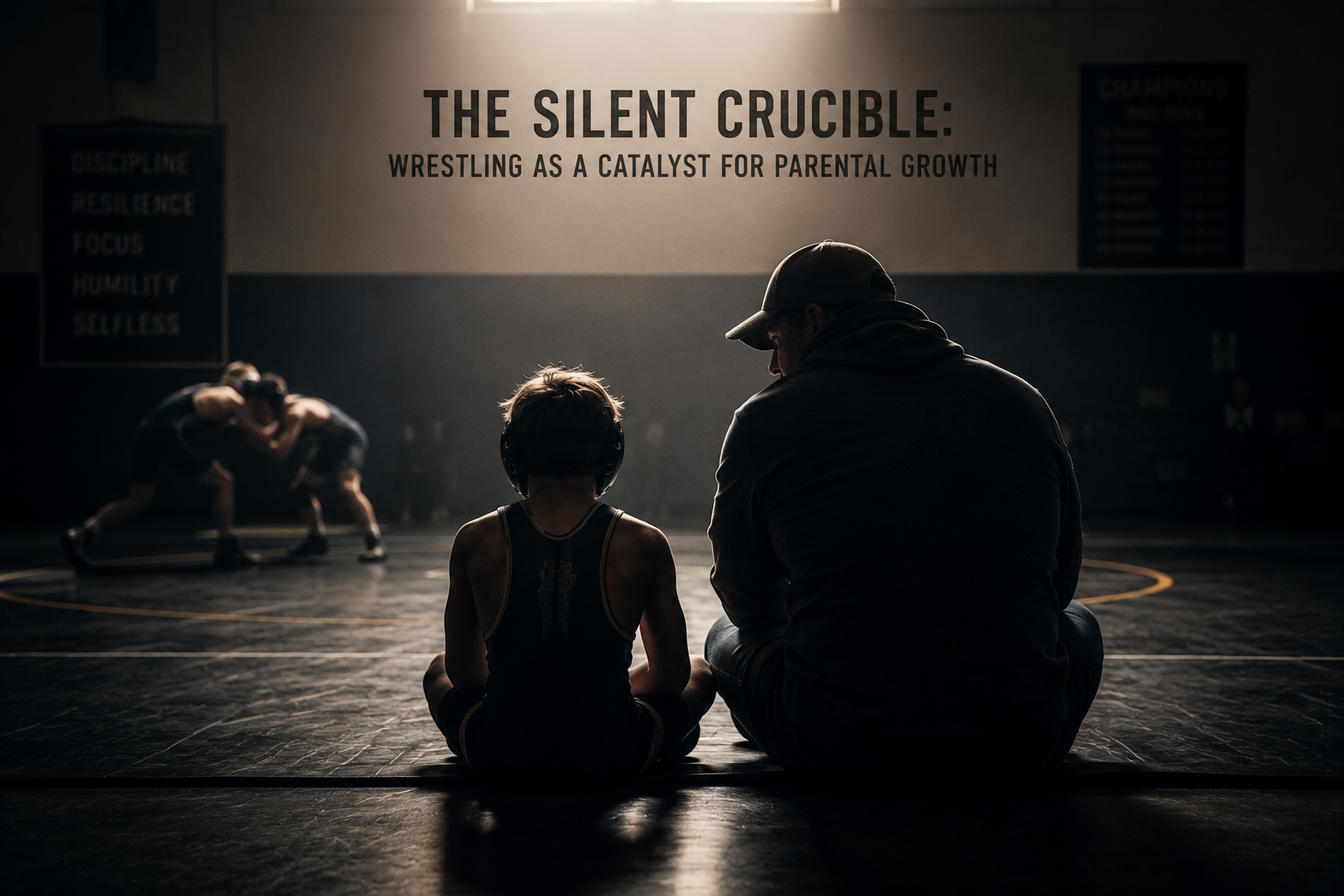
The Silent Crucible: Wrestling as a Catalyst for Parental Growth
In the arena of youth athletics, wrestling is uniquely celebrated for its ability to forge resilience and grit in the young. Yet, we rarely discuss the intense psychological and emotional toll this sport exerts on the adults standing just beyond the mat. Wrestling tournament pressure is not a burden borne by children alone; it is a shared experience that demands a specific, often painful, brand of maturity from parents.
The Anatomy of Sideline Pressure
For a wrestling parent, the experience is visceral. It begins with the cold, buzzing anxiety of pre-match nerves and evolves into the suffocating silence of a high-stakes scramble. Perhaps the most difficult moment is the literal “pit in the stomach” that arises when a child is pinned.
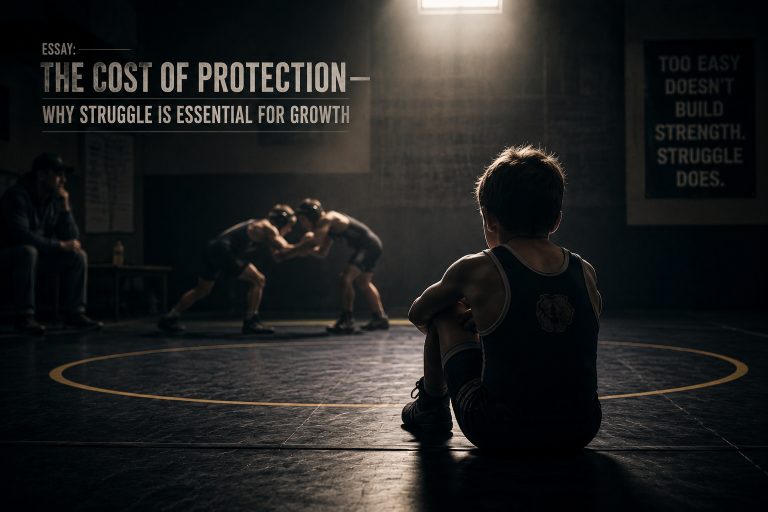
Unlike team sports, where a parent’s energy can be diffused into a crowd, wrestling is an isolation chamber. The parent must watch their child struggle in a one-on-one confrontation, unable to step in, unable to fix the problem, and unable to shoulder the physical burden. This forced helplessness is a profound test of character, requiring the parent to stand firm in the face of their own protective instincts.
The Discipline of Restraint
Wrestling serves as a mandatory masterclass in patience and emotional boundaries. Because the sport is so intimate and intense, it is dangerously easy for a parent’s ego to become entangled with their child’s performance. The true challenge for the parent is the conscious separation of their own identity from the outcome on the scoreboard.
This restraint is vital because children are emotional barometers; they are highly attuned to their parents’ internal states. If a parent carries the pressure visibly, the child inevitably absorbs it, compounding their own stress. Conversely, a parent’s emotional stability provides a blueprint for the athlete. By staying steady, the parent teaches the child how to remain composed under fire.
Building More Than Just Athletes
Ultimately, wrestling is a transformative process for the entire family unit. The sport demands that parents grow in tandem with their children, fostering a level of emotional maturity that extends far beyond the gymnasium. It isn’t just about building wrestlers who can handle a takedown; it’s about cultivating parents who can endure the discomfort of watching their children face adversity.
The mat, in the end, serves as a mirror. It reflects the child’s burgeoning strength, but it also reflects the parent’s capacity for empathy, composure, and unconditional support. Wrestling proves that the toughest matches aren’t always won with a move on the mat—they are won in the quiet, disciplined restraint of the sidelines.