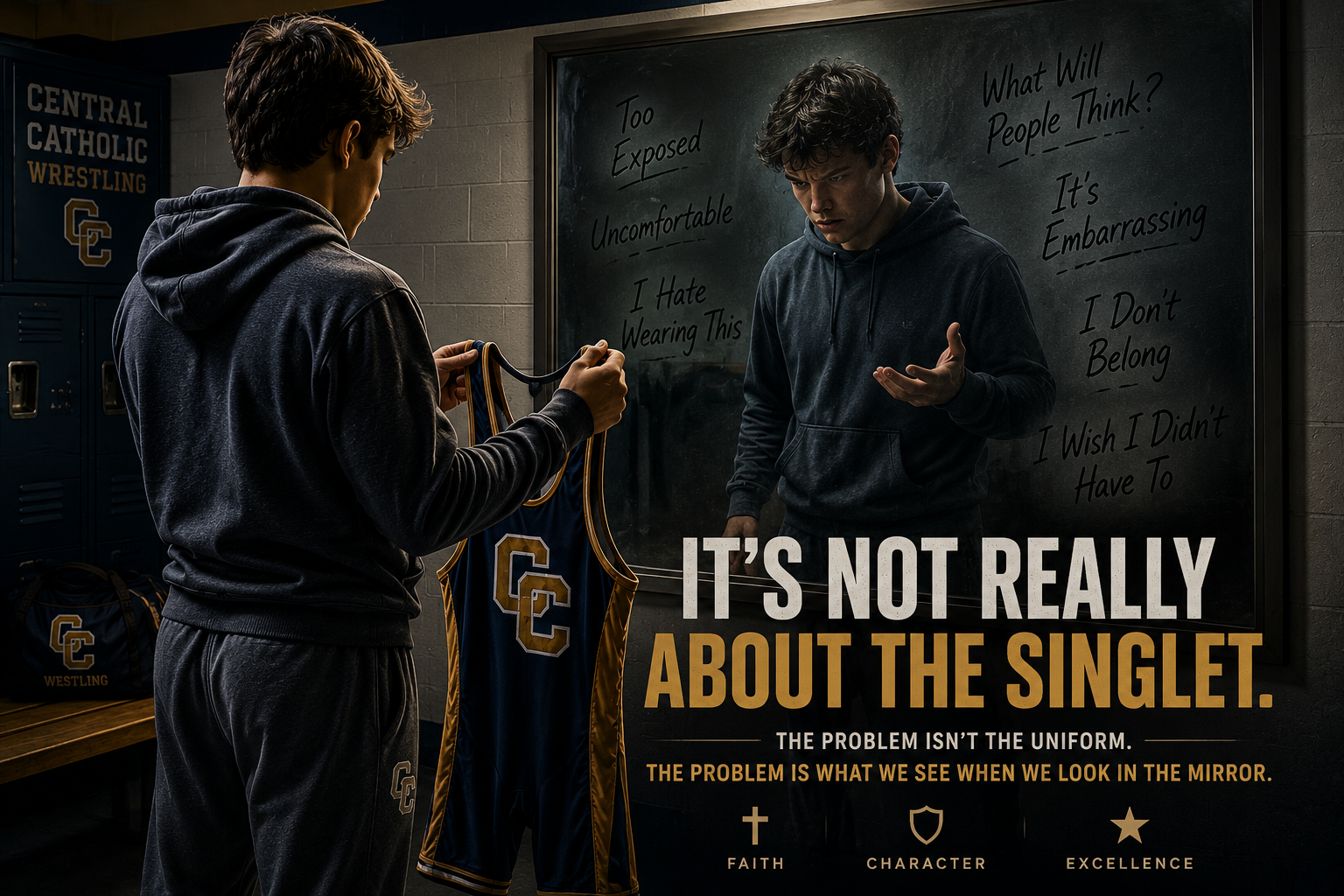
It’s Not Really About the Singlet
Every wrestling coach has heard it.
Every veteran wrestler has heard it.
Every wrestling parent has heard it.
“I’d wrestle, but I don’t want to wear a singlet.”
For decades, that statement has been one of the most common reasons given by athletes who choose not to participate in wrestling. In fact, the concern became so widespread that wrestling’s governing bodies eventually approved an alternative uniform, commonly known as a doublet. Many believed that participation numbers would immediately rise once athletes no longer felt obligated to wear a singlet.
The increase never came.
While some programs adopted the two-piece uniform, many eventually returned to the traditional singlet. Wrestlers generally found it more comfortable, more functional, and more practical for competition. More importantly, the anticipated wave of new athletes never materialized.
The reason is simple.
For most people, it was never really about the singlet.
What Athletes Think They’re Saying
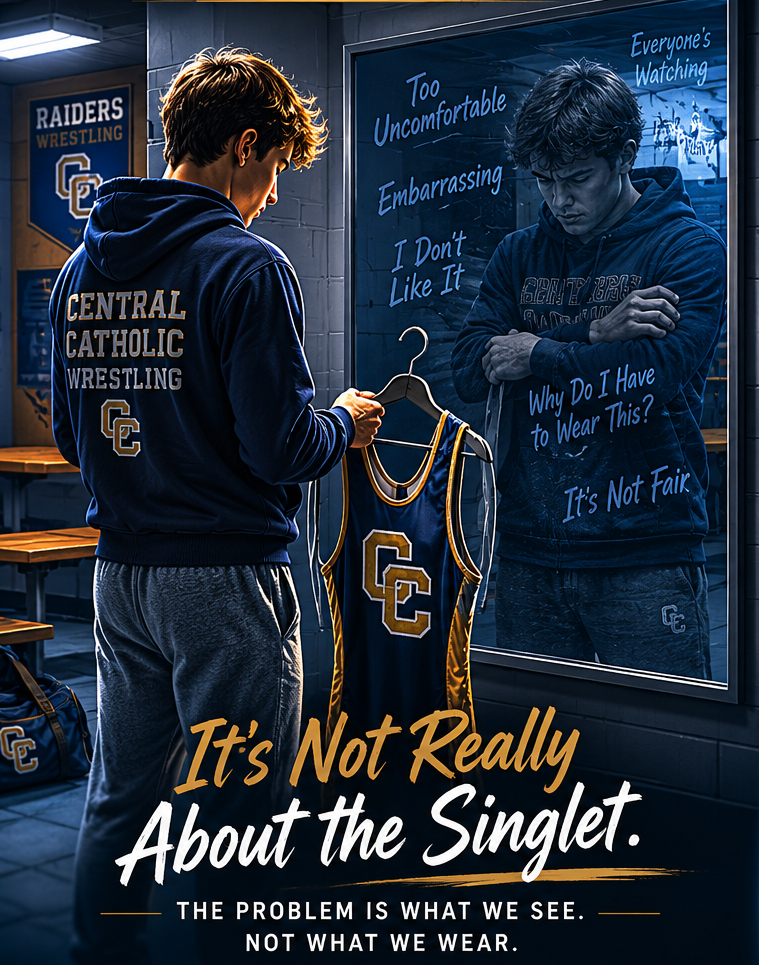
When a prospective wrestler says they don’t want to wear a singlet, they often believe they are making a statement about clothing.
Maybe they feel self-conscious.
Maybe they don’t like the appearance.
Maybe they worry about standing out.
Maybe they simply feel uncomfortable wearing something different than what athletes in other sports wear.
Those concerns are understandable. Most teenagers are navigating questions of confidence, identity, and social acceptance. Few people enjoy putting themselves in situations where they feel exposed or vulnerable.
From their perspective, the objection seems straightforward.
It’s just about the uniform.
What Wrestlers Often Hear
The interesting part is that experienced wrestlers rarely interpret the statement that way.
Fairly or unfairly, many coaches and veteran wrestlers hear something different.
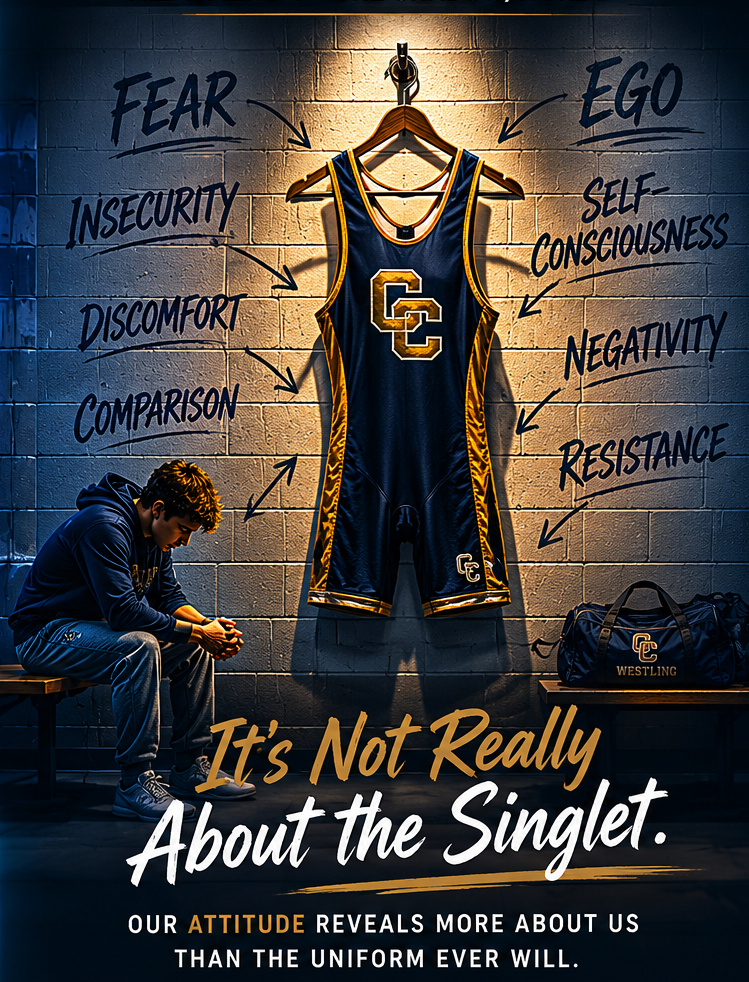
They hear fear.
They hear insecurity.
They hear someone looking for a socially acceptable reason to avoid something that feels intimidating.
Some may interpret it as immaturity. Others may view it as a lack of confidence. Some may even assume the athlete is uncomfortable with the uniquely physical nature of wrestling and is using the uniform as a convenient explanation.
Whether those assumptions are accurate is not really the point.
The important thing is understanding that those assumptions exist.
When someone says, “I won’t wrestle because of the singlet,” very few experienced wrestlers walk away thinking the conversation was actually about clothing.
Instead, they usually assume there is a deeper concern that has not yet been identified or expressed.
Why Wrestling Feels Different
Part of the reason for this disconnect is that wrestling asks athletes to do something that few sports require.
It demands individual accountability.
In many sports, athletes share both victory and defeat with teammates. A mistake can be absorbed by the group. A poor performance can be hidden within a larger team effort.
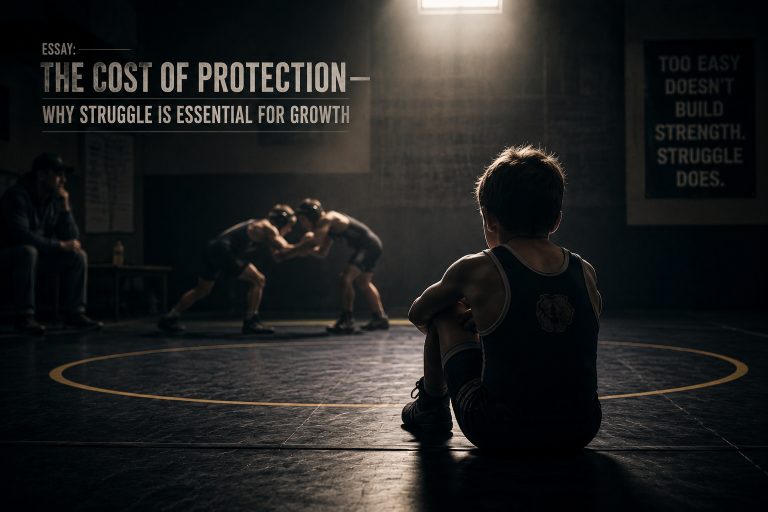
Wrestling offers no such protection.
When the whistle blows, there is nowhere to hide.
Your preparation is tested.
Your conditioning is tested.
Your technique is tested.
Your composure is tested.
Win or lose, the outcome belongs to you.
For many young athletes, that level of accountability is uncomfortable. The singlet often becomes a symbol of that discomfort because it represents standing alone in the center of attention.
The uniform becomes the visible thing people point to, even when the actual challenge lies somewhere deeper.
The Real Vulnerability
The truth is that wrestling exposes more than your appearance.
It exposes your effort.
It exposes your habits.
It exposes your willingness to face adversity.
It exposes your ability to fail publicly and return the next day anyway.
This is why some of the most gifted athletes in a school occasionally avoid wrestling despite possessing the physical tools to succeed. Their concern is rarely about athletic ability. More often, it is about vulnerability.
Wrestling offers very few places to hide.
And vulnerability can be frightening.
In a culture that often encourages people to protect themselves from discomfort, wrestling asks athletes to walk directly toward it.
The Great Discovery Every Wrestler Makes
Something interesting happens once athletes finally step onto the mat.
The thing they spent so much time worrying about almost immediately disappears.
The first few minutes in a singlet may feel awkward.
The first tournament may feel awkward.
The first walk to the center circle may feel awkward.
Then the match begins.
Suddenly, nobody is thinking about uniforms.
They’re thinking about hand fighting.
They’re thinking about position.
They’re thinking about scoring.
They’re thinking about winning.
Within moments, the singlet becomes completely irrelevant.
The competition becomes everything.
Veteran wrestlers understand this because they have all experienced it themselves. Nearly every wrestler remembers feeling nervous the first time they wore one. Nearly every wrestler eventually realized they had wasted energy worrying about something that did not matter.
What Wrestling Gives Back
The irony is that the very thing many athletes fear is often the source of wrestling’s greatest benefits.
The athlete who feels self-conscious develops confidence.
The athlete who fears failure develops resilience.
The athlete who avoids attention learns self-belief.
The athlete who struggles learns perseverance.
These qualities are not developed by avoiding difficult experiences.
They are developed by confronting them.
Wrestling provides that opportunity in a way few other activities can.
Looking Inward
Perhaps the most important question for any athlete considering wrestling is not whether they want to wear a singlet.
The more important question is why the singlet feels important in the first place.
Is it really about the uniform?
Or is the uniform simply pointing toward a deeper fear?
Fear of judgment.
Fear of failure.
Fear of accountability.
Fear of standing alone.
There is nothing shameful about those fears. Nearly everyone experiences them at some point.
The difference is that wrestlers learn to move through them.
And in doing so, they often discover that the greatest obstacle was never the singlet.
It was the story they were telling themselves about what the singlet represented.
Once that story disappears, the uniform becomes just another piece of athletic equipment.
What remains is the opportunity to become stronger, more confident, and more resilient than you were before.
And that is what wrestling was really about all along.