
The Value of Having Skin in the Game
One of the most important lessons wrestling teaches has very little to do with takedowns, escapes, or championship matches.
It teaches ownership.
Every wrestler eventually learns that the things they value most are often the things they worked hardest to obtain. The victories mean more because of the difficult practices that came before them. The accomplishments feel more significant because of the sacrifices required to achieve them.
The same principle applies far beyond the wrestling mat.
It applies to education.
It applies to training opportunities.
It applies to travel, competition, camps, clinics, and virtually every investment made in a young person’s future.
People naturally place a higher value on things they help build.
That is why we believe student-athletes benefit enormously when they have some level of financial investment in their own development.
Not because they should carry the entire burden.
But because they should carry part of it.
What “Skin in the Game” Really Means
The phrase “skin in the game” is often misunderstood.
It does not mean every family has the same resources.
It does not mean every athlete should pay for everything themselves.
It certainly does not mean that accepting help from others is wrong.
In fact, one of the most beautiful aspects of athletics and education is the willingness of communities to invest in young people. Scholarships, financial aid, sponsorships, donations, volunteer efforts, and countless acts of generosity create opportunities that otherwise would not exist.
Many student-athletes have achieved incredible things because someone believed in them enough to help.
That generosity matters.
But so does participation.
When an athlete contributes in some meaningful way—whether through work, fundraising, savings, summer jobs, or personal sacrifice—they begin to see those opportunities differently.
The opportunity is no longer something they simply receive.
It becomes something they helped create.
Appreciation Grows Through Participation
Most parents have experienced this phenomenon firsthand.
A child who saves for something often values it differently than a child who receives it without effort.
The item itself may be identical.
The appreciation is not.
The difference lies in ownership.
When young people contribute toward their education, training, travel, or competition expenses, they begin to connect effort with opportunity.
They see the relationship between sacrifice and reward.
They learn that valuable things often require investment.
Perhaps most importantly, they develop a deeper appreciation for the people who helped make those opportunities possible.
When an athlete has worked long hours, saved money, or sacrificed personal comforts to contribute toward a goal, they gain a much clearer understanding of the sacrifices others are making on their behalf as well.
The result is often gratitude rather than expectation.
Lessons That Cannot Be Taught in a Classroom
Some lessons are difficult to teach through words alone.
Responsibility is one of them.
Self-reliance is another.
Stewardship may be the most important of all.
These lessons are usually learned through experience.
A young person who works to contribute toward their own future begins to understand concepts that many adults spend years trying to learn.
They learn to budget.
They learn to prioritize.
They learn to delay gratification.
They learn that every dollar represents someone’s effort.
Those lessons remain valuable long after a wrestling career ends.
In many ways, they become part of the foundation for adulthood.
The Quiet Examples Around Us
One of the most encouraging realities within our wrestling community is that examples of this mindset already exist.
We have seen student-athletes who worked long hours while maintaining demanding academic schedules.
We have seen athletes contribute meaningfully toward their own education and training expenses.
We have seen young people willingly sacrifice comforts and conveniences in pursuit of long-term goals.
Perhaps most inspiring are the athletes who could have accepted more assistance than they ultimately chose to receive because they understood that resources are finite and opportunities should remain available for others.
These athletes rarely seek recognition.
Most people never hear their stories.
Yet their actions reveal a level of maturity and responsibility that deserves admiration.
They are proving that young people are capable of far more than we sometimes assume.
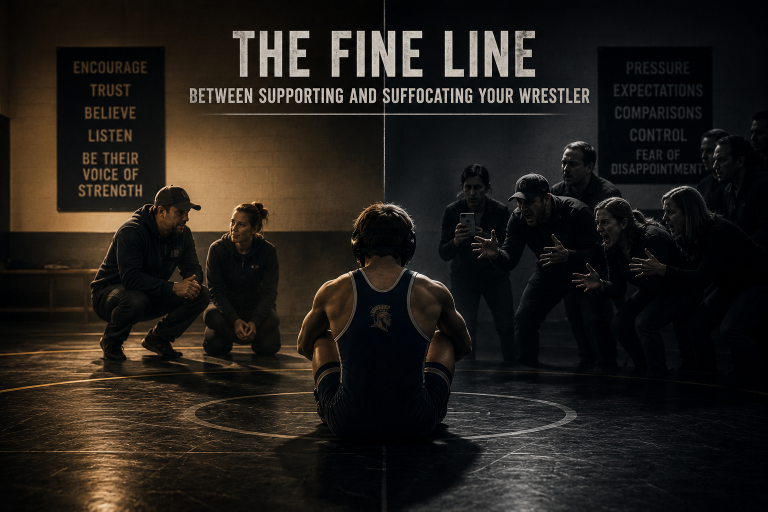
The Parent’s Role
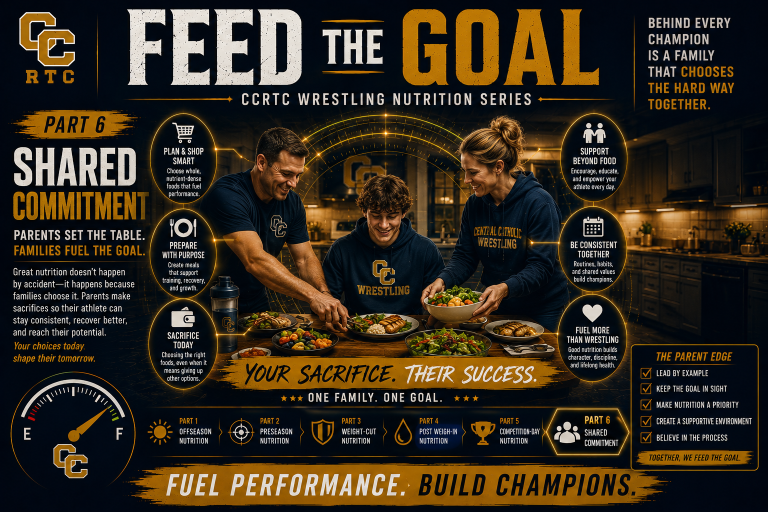
Parents naturally want to provide for their children.
That instinct comes from a place of love.
But there is an important difference between providing opportunities and removing every challenge.
Sometimes the greatest gift a parent can give is the opportunity to contribute.
When parents encourage their children to work toward a goal, save toward an expense, or help carry part of the responsibility, they are doing more than teaching financial skills.
They are teaching ownership.
They are teaching gratitude.
They are teaching confidence.
They are teaching a young person that they are capable of helping shape their own future.
That lesson may be more valuable than the financial contribution itself.
Building Better Athletes and Better Adults
The ultimate goal is not to create student-athletes who pay for everything themselves.
The goal is to develop young people who understand the relationship between effort and opportunity.
Young people who appreciate the sacrifices of others because they have made sacrifices of their own.
Young people who view assistance as a blessing rather than an expectation.
Young people who understand that communities thrive when everyone contributes according to their abilities.
Wrestling teaches us that growth rarely comes without effort.
The same is true in life.
The athletes who learn to invest in themselves—whether through hard work, sacrifice, time, or financial contribution—often gain something far more valuable than the money involved.
They gain ownership.
And people almost always take better care of things they helped build.