Forged Through Pressure: How Wrestling Strengthens the Mind and Improves Academic Performance
High school wrestling is often viewed as one of the toughest sports in America, demanding extraordinary levels of physical endurance, mental toughness, and discipline. While outsiders may focus only on the grueling practices, strict diets, and intense competition, the benefits of wrestling extend far beyond the mat. Strenuous exercise—especially in sports like wrestling—has been proven to improve mental health, sharpen focus, reduce stress, and even enhance academic performance. In fact, studies have shown that students who continue rigorous athletic training during high-pressure academic periods, such as final exams, often perform better mentally and academically than those who stop exercising to study more.
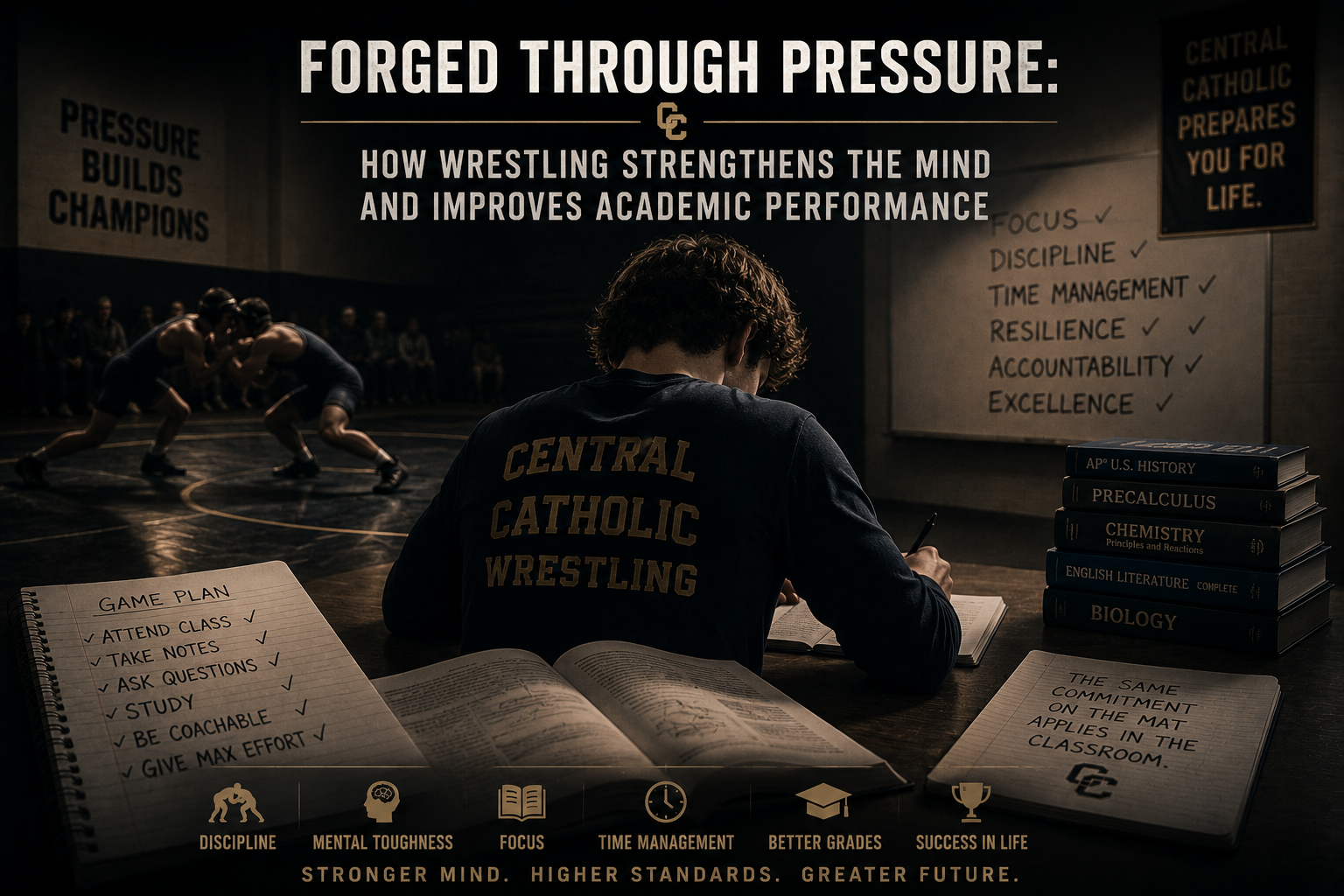
One of the greatest benefits of wrestling is the development of mental resilience. Wrestling forces athletes to face adversity constantly. Every practice involves exhaustion, discomfort, and moments of self-doubt. Wrestlers learn to push through pain, stay composed under pressure, and continue working toward goals even when success is not immediate. These mental habits transfer directly into the classroom. Students who wrestle are often better prepared to handle difficult assignments, stressful deadlines, and challenging exams because they have already trained themselves to stay calm and focused under pressure.
In addition to mental toughness, strenuous exercise significantly improves brain function. Physical activity increases blood flow to the brain, delivering more oxygen and nutrients that support memory, concentration, and cognitive performance. Exercise also stimulates the release of chemicals such as endorphins and dopamine, which improve mood and reduce anxiety. During stressful periods like finals week, many students become overwhelmed, mentally fatigued, and emotionally drained. However, research has shown that students who continue exercising during these periods often experience lower stress levels and improved mental clarity compared to students who become sedentary.
This connection between exercise and academic success has been supported by numerous studies. Researchers have found that regular physical activity improves executive functioning, which includes skills such as time management, problem-solving, organization, and concentration. Wrestlers, in particular, must balance demanding training schedules with schoolwork, forcing them to become highly disciplined and efficient with their time. The structure required to succeed in wrestling often creates stronger study habits and personal accountability.
Furthermore, wrestling teaches goal setting and delayed gratification. Athletes spend months preparing for competitions, understanding that success comes from consistent daily effort rather than instant results. This mindset mirrors academic achievement. Students who wrestle are more likely to understand the value of preparation, repetition, and perseverance when studying for exams or completing long-term projects. They become comfortable working hard even when rewards are not immediate.
Another important benefit is the reduction of stress and anxiety. During intense academic periods, many students experience burnout because they spend all their time studying without giving their minds a chance to reset. Rigorous exercise acts as a natural stress reliever. Training sessions allow athletes to release tension, clear their minds, and return to studying with improved focus and energy. Instead of hurting academic performance, exercise often enhances it by preventing mental exhaustion.
Wrestling also builds confidence. Every challenge overcome in practice or competition reinforces the belief that difficult obstacles can be conquered through effort and discipline. This confidence can carry into academics, helping students approach difficult subjects or major exams with a more positive and determined mindset. A wrestler who has survived exhausting conditioning sessions and intense matches is less likely to be intimidated by a difficult test.
Critics sometimes argue that sports take time away from academics, but wrestling demonstrates the opposite. The discipline, focus, and mental endurance developed through strenuous exercise often make student-athletes more productive and successful in school. Many high-achieving students and professionals credit athletics for teaching them the habits necessary for long-term success.
In conclusion, strenuous exercise through sports like high school wrestling provides enormous mental and academic benefits. Wrestling strengthens resilience, improves brain function, reduces stress, enhances discipline, and builds confidence. Studies continue to show that maintaining rigorous physical activity—even during stressful periods like finals week—can improve both mental well-being and academic performance. Wrestling is far more than a sport; it is a training ground for life, teaching young people how to endure hardship, manage pressure, and achieve success both inside and outside the classroom.