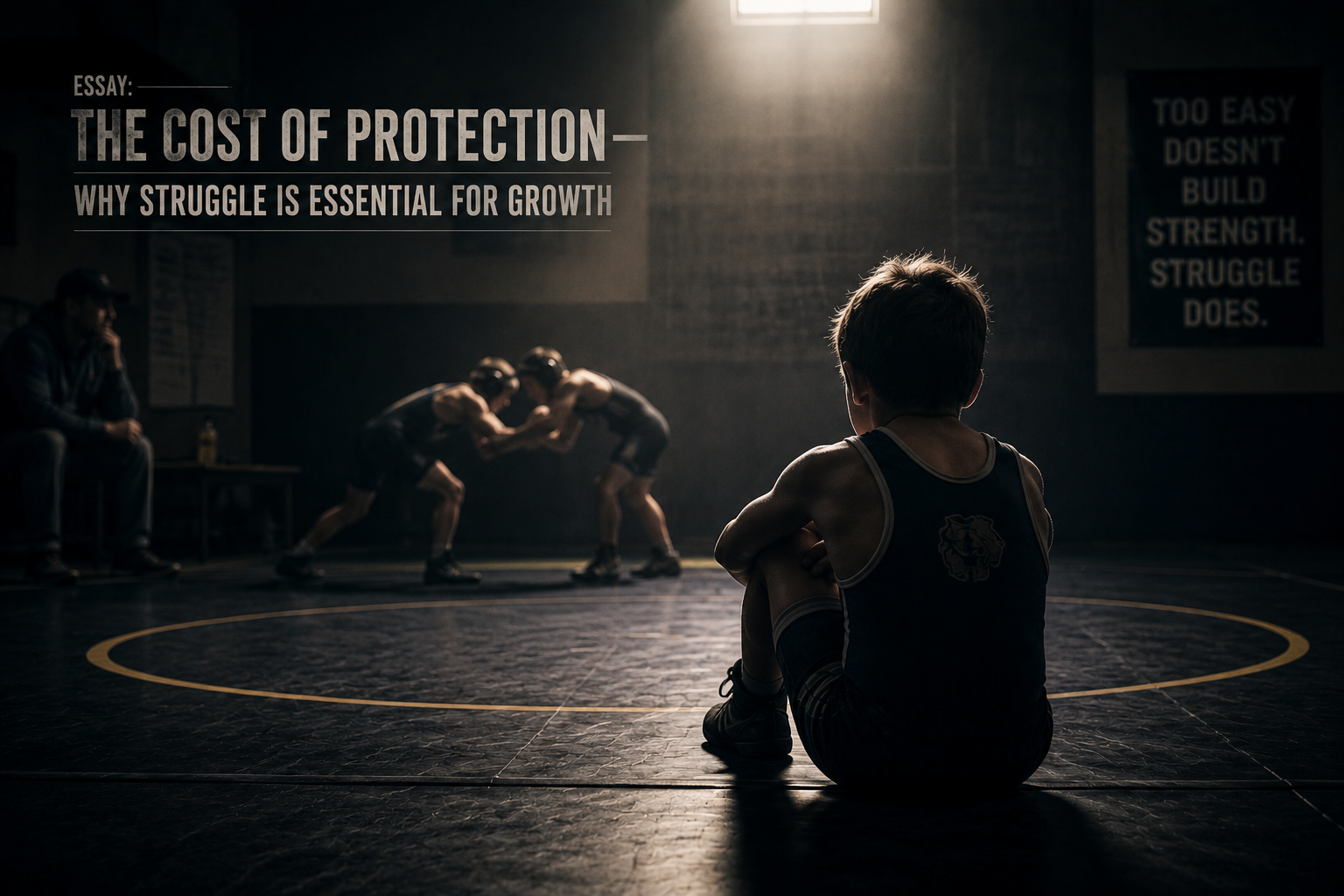
The Cost of Protection — Why Struggle is Essential for Growth
In youth sports—and more broadly in life—there exists a persistent tension between protection and development. Parents and coaches often face a difficult decision: should they shield young athletes from overwhelming challenges, or expose them to adversity that may temporarily break their confidence? The instinct to protect is deeply human. Watching a child struggle, lose badly, or feel defeated is uncomfortable. Yet, paradoxically, this instinct—when overapplied—can become one of the greatest barriers to long-term growth.
At the heart of this issue lies a misunderstanding of what development actually requires. Growth is not built through comfort; it is forged through resistance. When a child is consistently matched only against equal or weaker competition, they may win more often, but they are deprived of the very experiences that build resilience, adaptability, and mental toughness. Easy wins reinforce ego, not skill. Hard losses, on the other hand, force reflection, humility, and improvement.
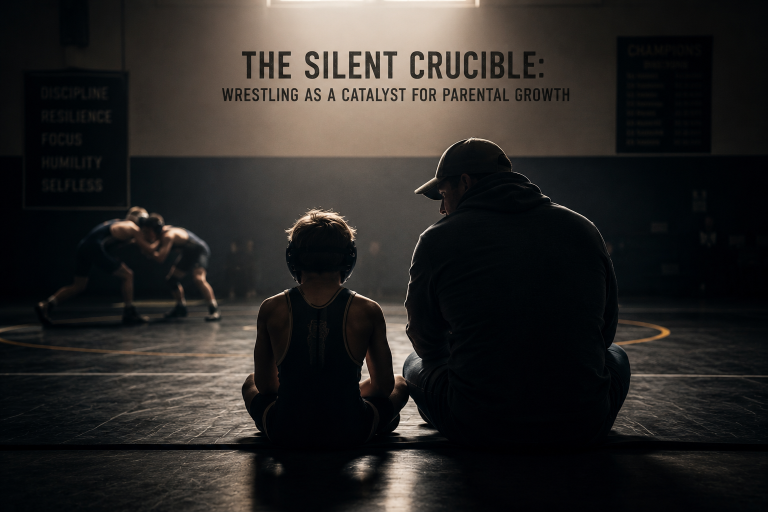
The phrase “you don’t want your kid getting smashed” captures a common fear—but it also reveals a deeper truth: the experience of being “smashed” is often where the most meaningful learning occurs. In wrestling, for example, facing a superior opponent exposes technical gaps, physical limitations, and psychological weaknesses all at once. These moments provide clarity. They answer the question: What do I actually need to improve? Without that exposure, development becomes abstract and stagnant.
However, the issue is not simply about throwing kids into the hardest situations possible. There is a nuanced balance. Growth requires what psychologists often refer to as the “optimal challenge point”—a level of difficulty that stretches ability without completely overwhelming it. The problem arises when protection becomes the default strategy, removing challenge altogether rather than calibrating it.
Another critical dimension is identity formation. Children who are shielded from failure often tie their self-worth to winning. When they eventually encounter real adversity—as they inevitably will—they lack the emotional tools to process it. Conversely, children who regularly experience controlled struggle learn to separate outcome from identity. They begin to see themselves not as “winners” or “losers,” but as evolving competitors. This shift is foundational for long-term success, not only in sports but in academics, careers, and relationships.
There is also a cultural component at play. Modern parenting, in many cases, has shifted toward risk minimization. While this has benefits in areas of safety, it can unintentionally create fragility in performance environments. Sports, particularly disciplines like wrestling, offer a rare counterbalance: a space where difficulty is not only present but necessary. Avoiding that difficulty undermines the very purpose of participation.
Ultimately, the question is not whether kids will face adversity—it is when and how. Delaying exposure does not eliminate hardship; it simply postpones it to a stage where the stakes are higher and the consequences more significant. Introducing challenge early, in a structured and supportive environment, allows young athletes to build the skills needed to navigate adversity later in life.
The instinct to protect comes from a place of care. But true care is not about eliminating struggle—it is about preparing someone to handle it. In that sense, allowing a child to face a “hard match” is not an act of neglect; it is an act of investment. It communicates a deeper belief: you are capable of more than comfort, and growth lies on the other side of difficulty.