The Fine Line Between Supporting and Suffocating Your Wrestler
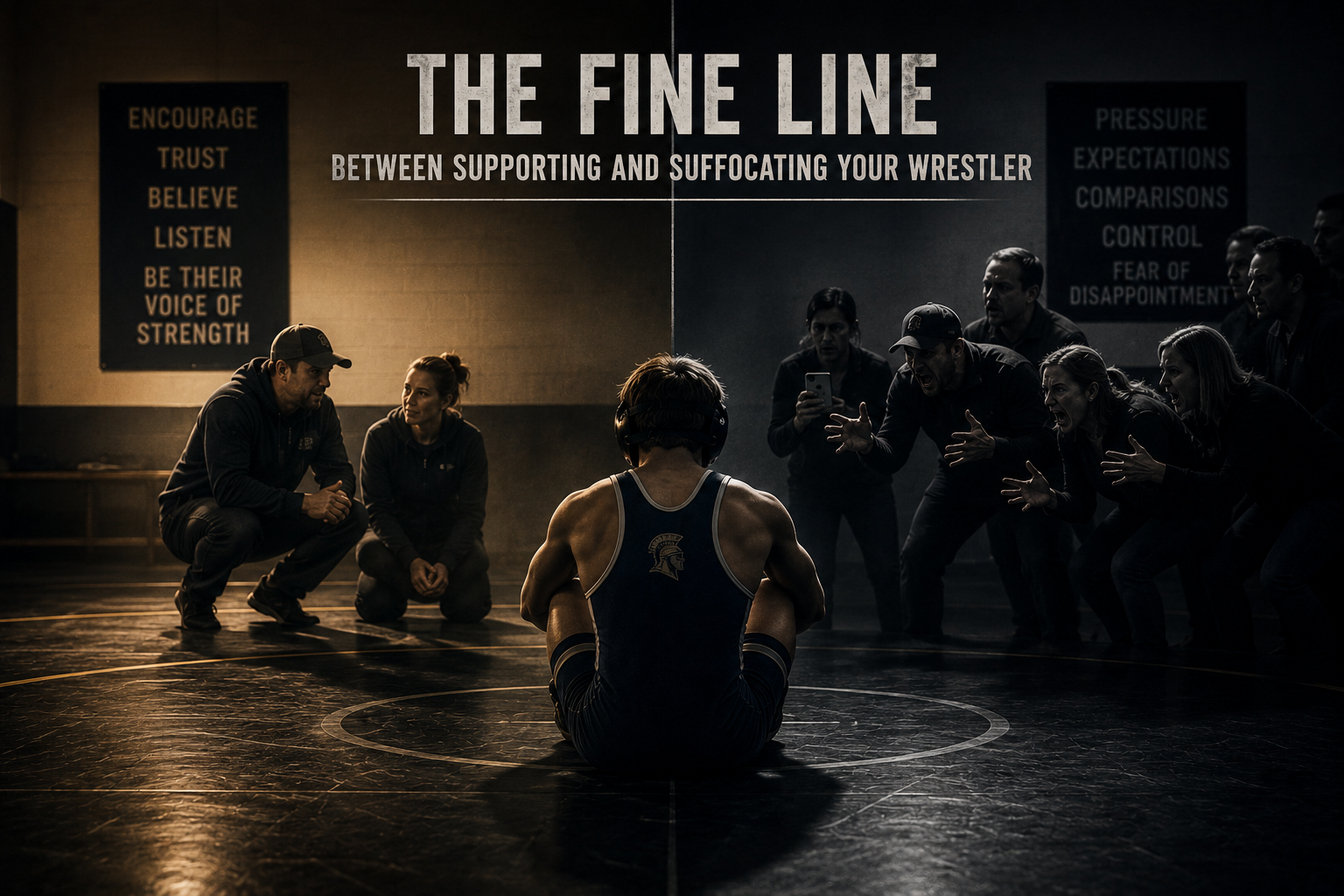
There is a fine line between being supportive and being suffocating.
And the truth is—most wrestling parents cross that line without even realizing it.
It doesn’t come from a lack of care.
It comes from caring too much in the wrong way.
It Starts With Small Differences
The difference between supportive and suffocating parenting isn’t always obvious. In fact, it often shows up in the smallest moments.
Supportive parents ask:
“How was practice?”
Suffocating parents ask:
“What did coach say about your technique?”
Supportive parents say:
“I’m proud of your effort.”
Suffocating parents say:
“You should have won that match.”
At first glance, both seem invested. Both seem engaged.
But one approach builds confidence.
The other builds pressure.
After the Match Matters Most
The gap becomes even clearer after competition.
Supportive parents allow their wrestler to process a loss.
They give space. They listen. They stay steady.
Suffocating parents step in immediately.
They analyze. They correct. They start coaching.
But here’s the reality:
Your athlete already knows what went wrong.
They felt it. They lived it.
What they need in that moment isn’t instruction.
They need support.
The Real Difference: Trust vs. Control
At its core, the difference comes down to one thing:
Supportive parents trust the process.
Suffocating parents try to control the outcome.
And wrestling doesn’t work that way.
Growth in this sport is earned through struggle—through mistakes, through losses, through uncomfortable lessons that can’t be skipped.
Your wrestler needs:
Space to fail
Space to figure things out
Space to build their own relationship with the sport
Without that space, development stalls.
What Happens When You Hover
When parents hover over every decision, every match, every moment, something shifts.
The athlete stops thinking for themselves.
They stop taking ownership.
And eventually, they stop wrestling for the right reasons.
Instead of stepping on the mat to challenge themselves,
They step on it trying not to disappoint you.
That’s when confidence erodes.
That’s when joy disappears.
And ironically—that’s when performance often declines.
What the Best Parents Do Differently
The most successful wrestlers don’t necessarily have the loudest parents, or the most involved ones.
They have parents who care deeply—but know when to step back.
They are present.
They are supportive.
But they don’t try to manage every moment.
They understand something many miss:
This journey doesn’t belong to them.
Let Them Own It
Your wrestler needs to own their journey.
Not just the wins.
Not just the highlight moments.
But the hard parts.
The frustrating practices.
The tough losses.
The messy, uncomfortable growth that defines wrestling.
Especially the messy parts.
Because that’s where resilience is built.
That’s where confidence is earned.
That’s where real development happens.
Final Thought
You don’t help your wrestler by removing struggle.
You help them by standing beside them through it—without taking control of it.
Care deeply.
Show up consistently.
Support without suffocating.
And trust that, given the space to grow,
Your athlete will become exactly who they’re supposed to be.